Reimagining the Kitchen System
Reimagining the Kitchen System
redesigning vendor operations for real-world cafeteria chaos
redesigning vendor operations for real-world cafeteria chaos
The Brief
The Brief
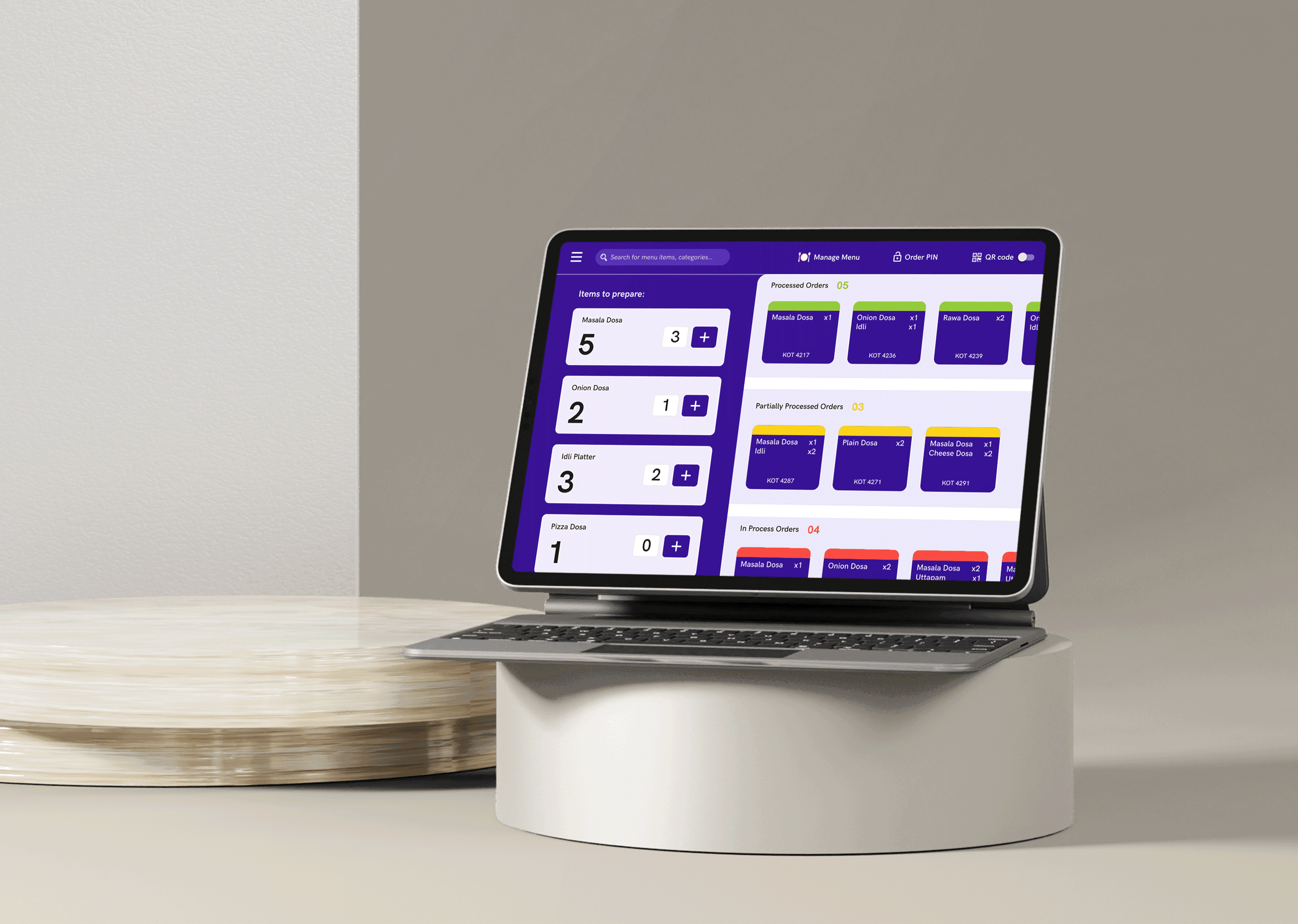
Automate and redesign the Kitchen System to reduce vendor actions and speed up order processing.
Automate and redesign the Kitchen System to reduce vendor actions and speed up order processing.
The Challenge
The Challenge
Vendors worked in chaotic kitchens with outdated tools, unclear orders, and heavy manual steps.
Vendors worked in chaotic kitchens with outdated tools, unclear orders, and heavy manual steps.
The Impact
The Impact
A fully streamlined, semi-automated kitchen workflow with:
98% vendor adoption
17% faster prep times
23% fewer order mistakes
A fully streamlined, semi-automated kitchen workflow with:
98% vendor adoption
17% faster prep times
23% fewer order mistakes
The Invisible
Backbone
The Invisible
Backbone
For most people, HungerBox was an app to skip queues and order food seamlessly. But behind the scenes, in the kitchens where food was actually made, the story was very different.
Vendors - the chefs and staff preparing thousands of meals every day - worked with outdated POS terminals, messy workflows, and in many cases, pen-and-paper slips taped to counters. Orders got missed. Inventory tracking was manual. Reports were incomprehensible.
If vendors struggled, users suffered. Late meals, wrong items, and confusion at counters all traced back to the same root: a broken vendor system.
For most people, HungerBox was an app to skip queues and order food seamlessly. But behind the scenes, in the kitchens where food was actually made, the story was very different.
Vendors - the chefs and staff preparing thousands of meals every day - worked with outdated POS terminals, messy workflows, and in many cases, pen-and-paper slips taped to counters. Orders got missed. Inventory tracking was manual. Reports were incomprehensible.
If vendors struggled, users suffered. Late meals, wrong items, and confusion at counters all traced back to the same root: a broken vendor system.
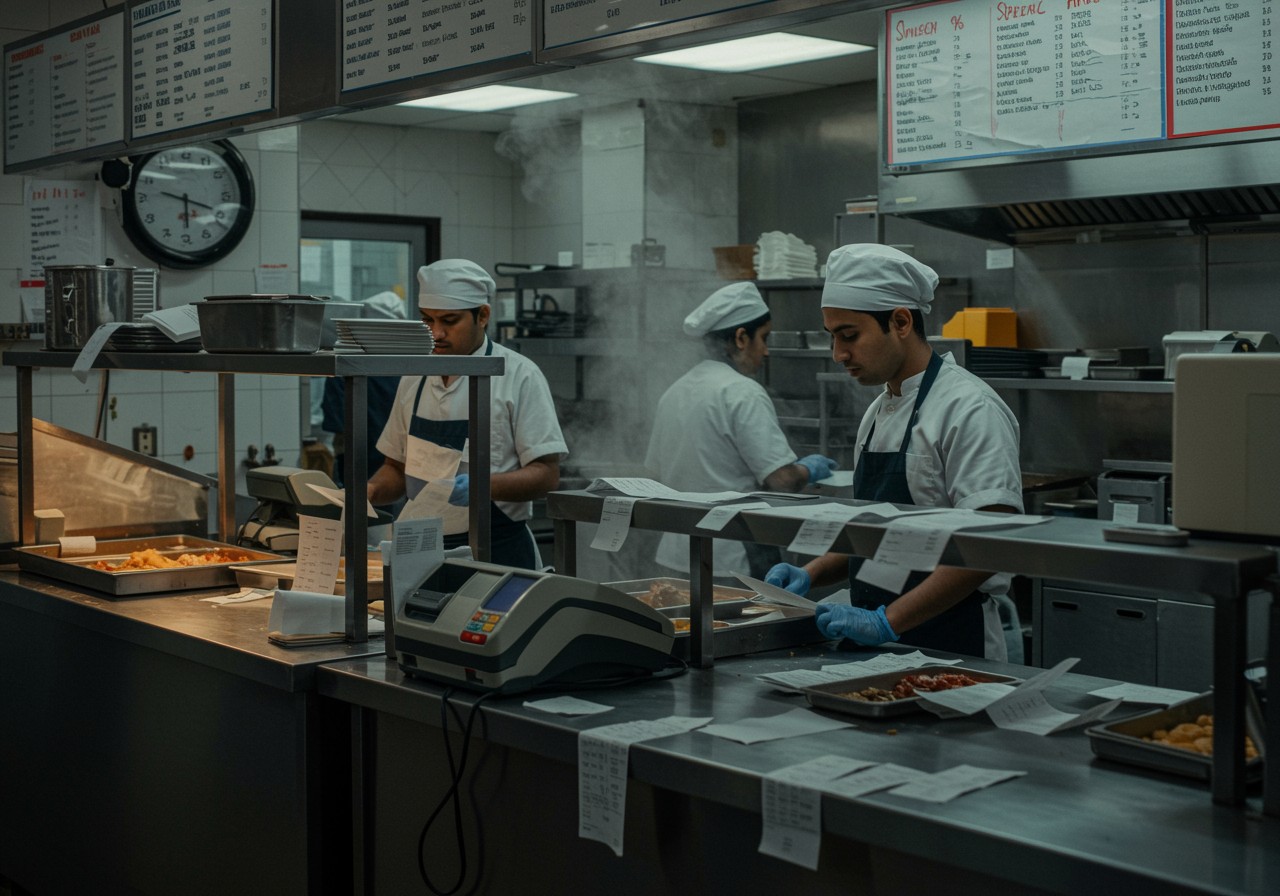
old-school receipt system was causing chaos
The Problem:
Clarity in Chaos
The Problem:
Clarity in Chaos
Cafeterias are intense environments. Noise, steam, peak-hour rush. Amid this, vendors had to juggle dozens of orders on systems never designed for them. We uncovered three core issues:
Orders displayed in bulk → partial items went unnoticed.
Switching between screens → wasted precious seconds.
Reports buried in jargon → unusable for non-technical staff.
Many vendors lacked digital fluency → UI had to be intuitive, visual, and multilingual.
If we didn’t fix this, the whole ecosystem would remain fragile.
Cafeterias are intense environments. Noise, steam, peak-hour rush. Amid this, vendors had to juggle dozens of orders on systems never designed for them. We uncovered three core issues:
Orders displayed in bulk → partial items went unnoticed.
Switching between screens → wasted precious seconds.
Reports buried in jargon → unusable for non-technical staff.
Many vendors lacked digital fluency → UI had to be intuitive, visual, and multilingual.
If we didn’t fix this, the whole ecosystem would remain fragile.
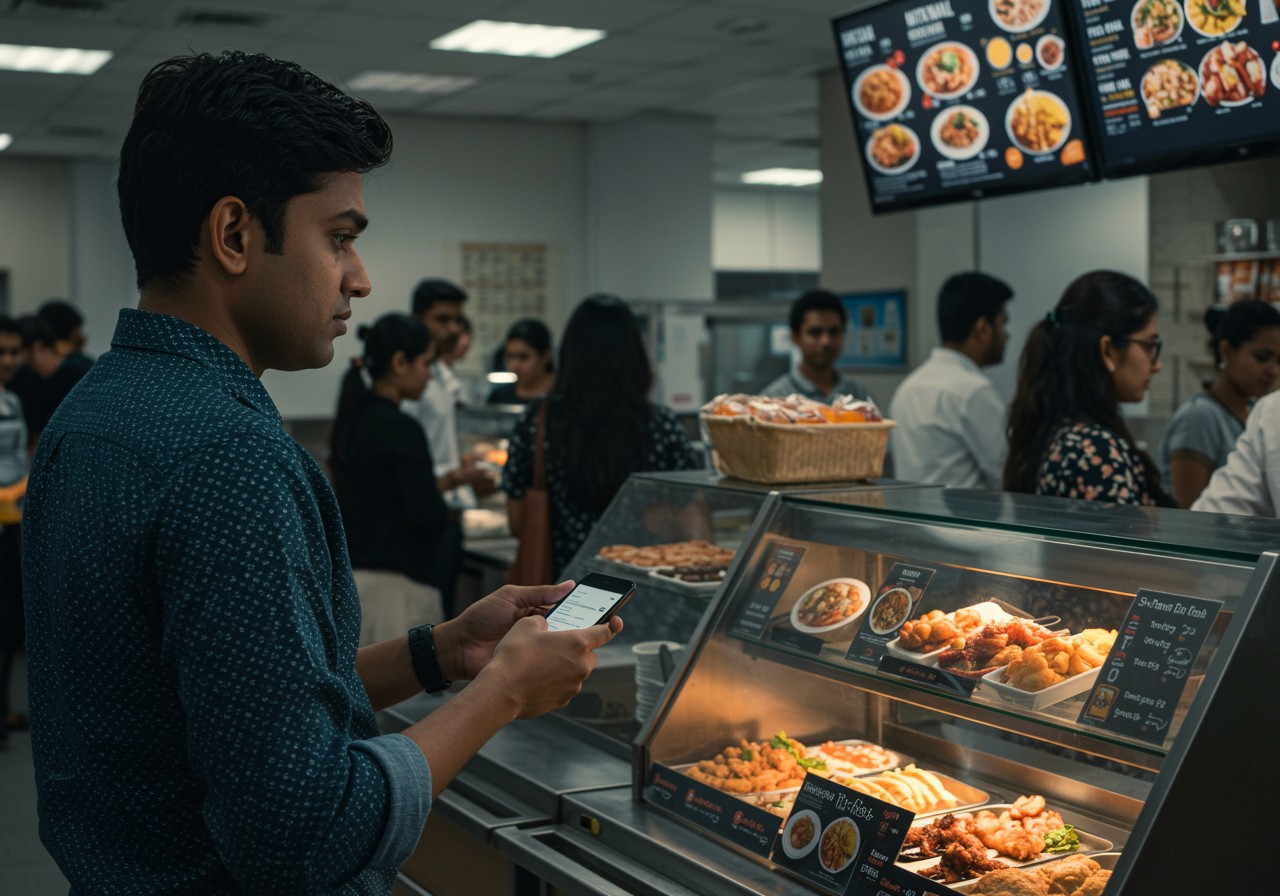
kitchen chaos unleashed
The Research:
Going into the
Kitchens
The Research:
Going into the Kitchens
To truly understand the pain, I didn’t sit in meeting rooms. I went into kitchens.
Shadowed vendors across 6 cafeterias during peak lunch hours
Ran contextual interviews in noisy, hot kitchen environments
Collected support tickets + error logs to spot recurring failures
Drew task flow diagrams of how an order moved from POS → prep → counter
To truly understand the pain, I didn’t sit in meeting rooms. I went into kitchens.
Shadowed vendors across 6 cafeterias during peak lunch hours
Ran contextual interviews in noisy, hot kitchen environments
Collected support tickets + error logs to spot recurring failures
Drew task flow diagrams of how an order moved from POS → prep → counter
I don't want reports,
I don't want reports,
I just want to know what to cook next!
I just want to know what to cook next!
Designing for
the Heat of
the Kitchen
Designing for the Heat
of the Kitchen
The design had to work under pressure - fast, glanceable, and resilient. Key design decisions:
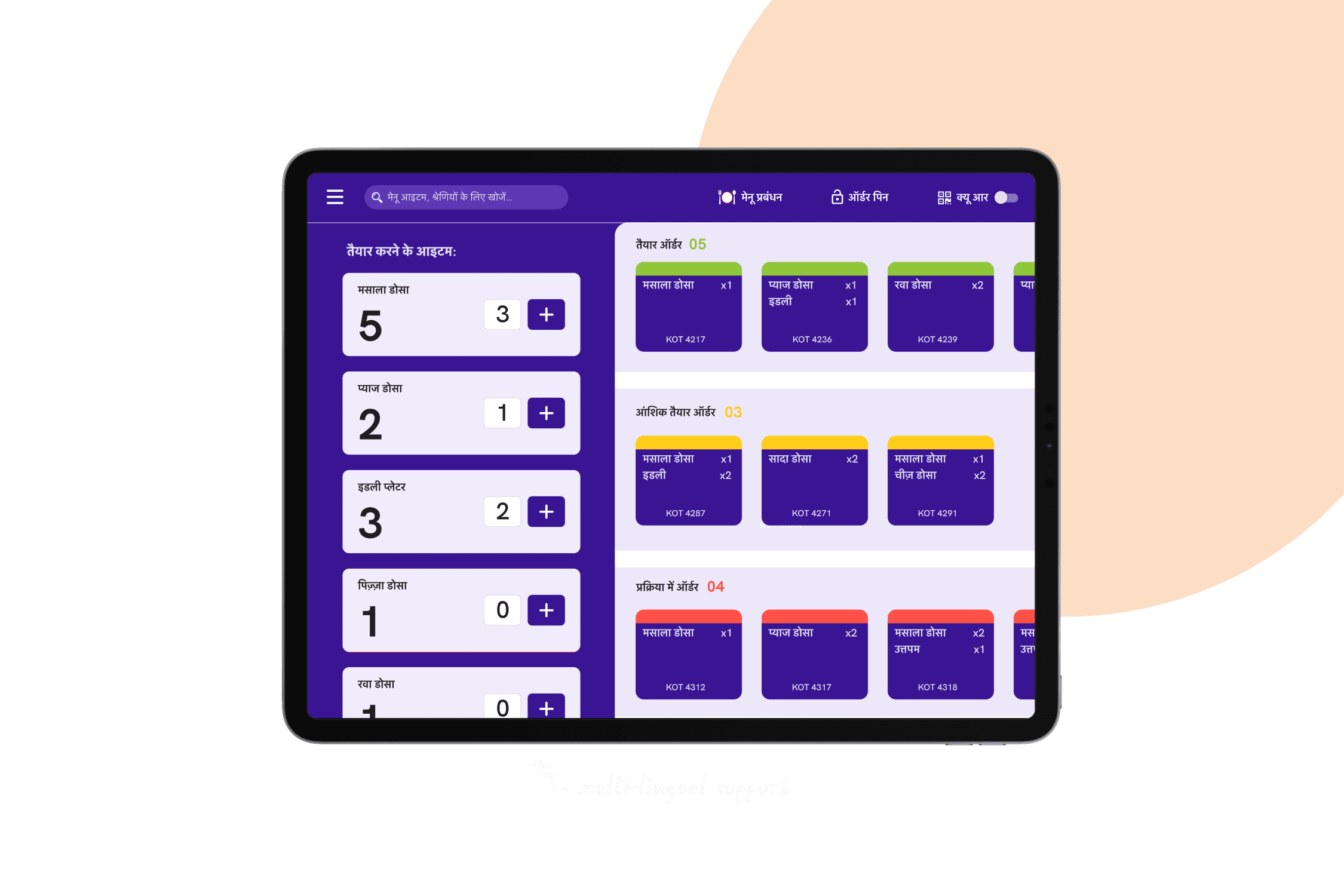
Item-Level Tracking → Break down each order into individual dishes with clear statuses.
Color-Coded Statuses → Red = canceled, Yellow = cooking, Green = ready. One glance was enough.
Batching → Group identical items across orders (“20 dosas”) instead of showing them separately.
Offline Mode → Orders cached locally in case internet failed.
Simplified Reports → Quick “top sellers” and “low inventory” alerts, no CSVs.
Icon-First UI → To bridge language and literacy gaps.
The design had to work under pressure - fast, glanceable, and resilient. Key design decisions:
Item-Level Tracking → Break down each order into individual dishes with clear statuses.
Color-Coded Statuses → Red = canceled, Yellow = cooking, Green = ready. One glance was enough.
Batching → Group identical items across orders (“20 dosas”) instead of showing them separately.
Offline Mode → Orders cached locally in case internet failed.
Simplified Reports → Quick “top sellers” and “low inventory” alerts, no CSVs.
Icon-First UI → To bridge language and literacy gaps.
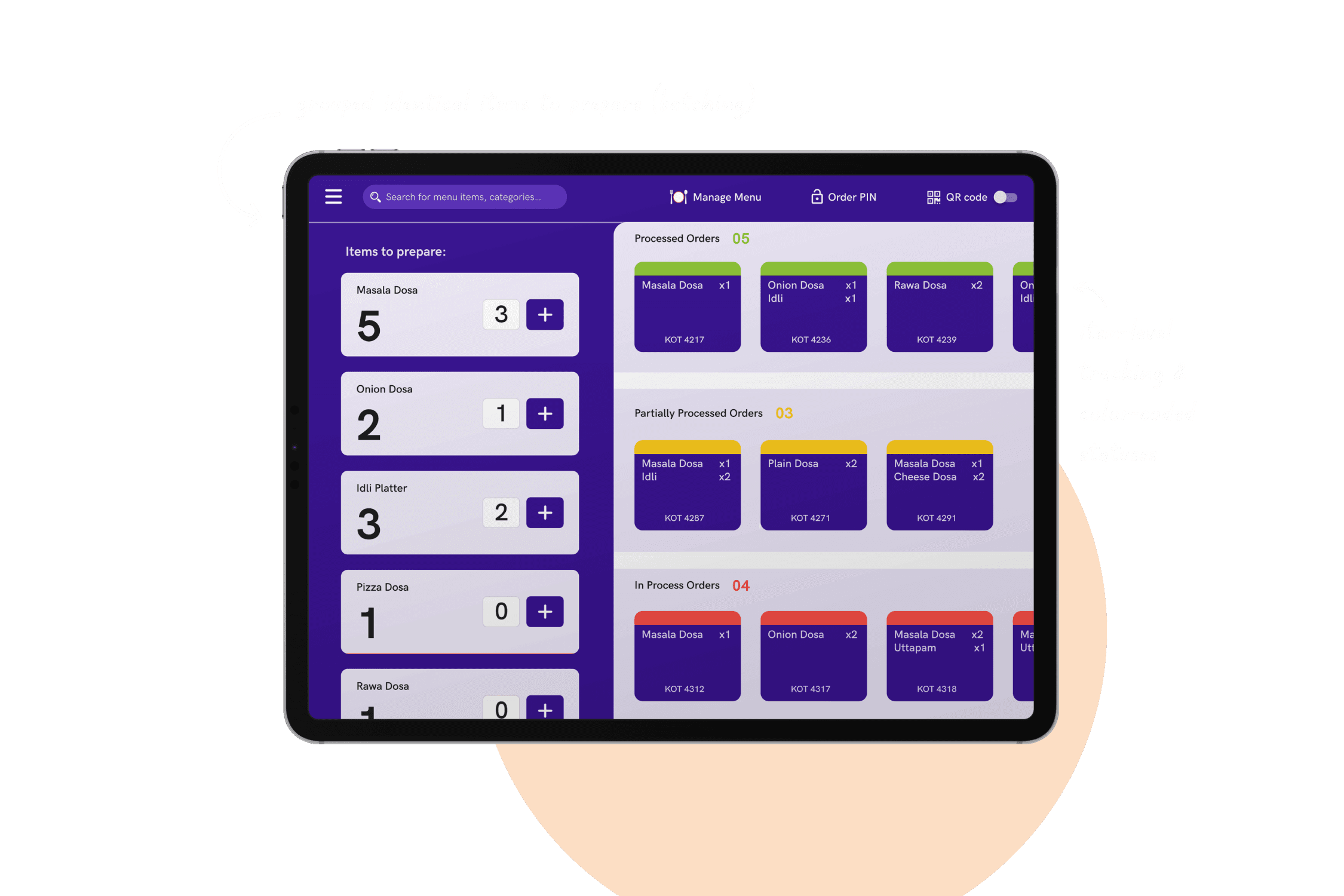
this is the display vendors refer for food preparation
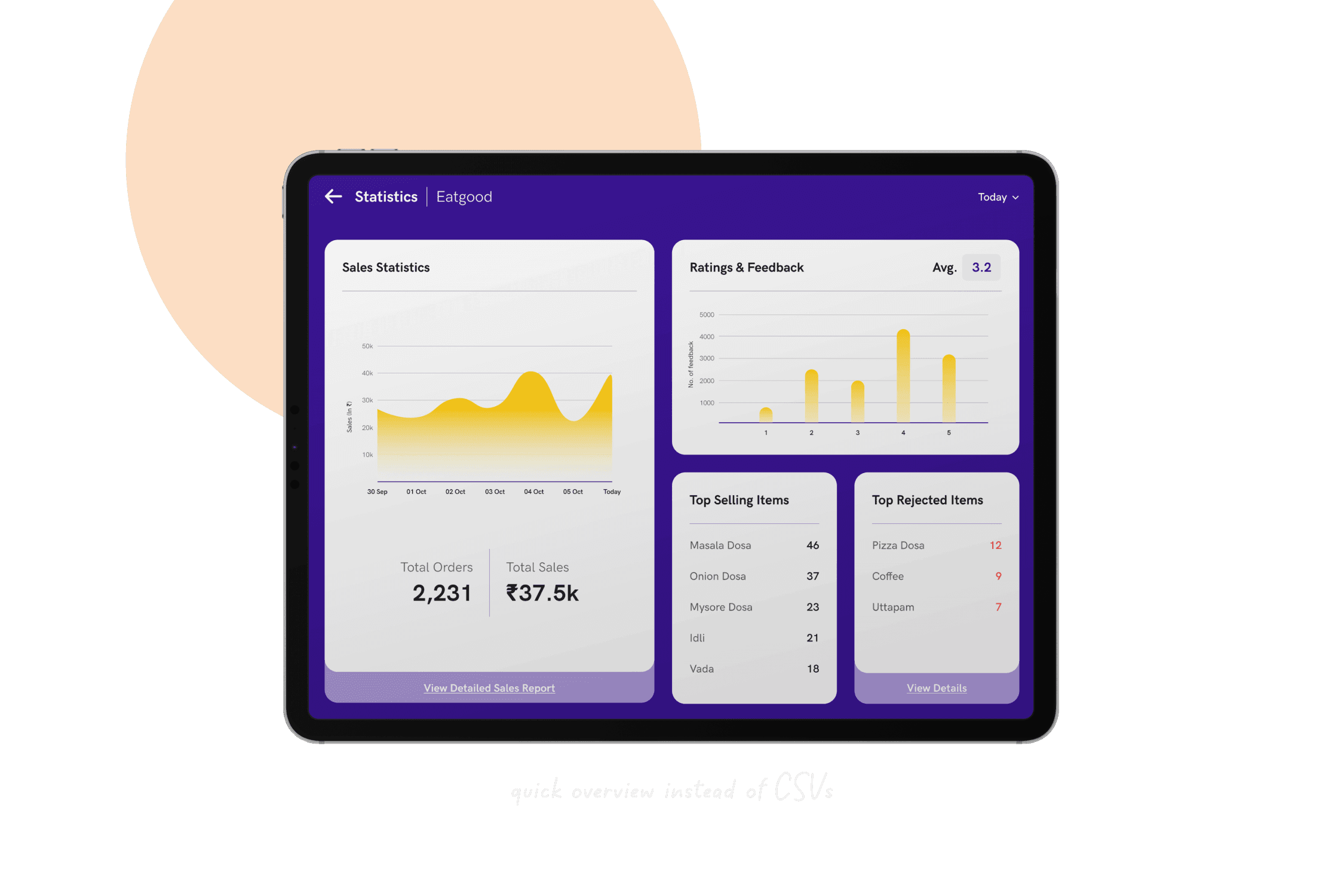
vendors can now view and download reports quickly
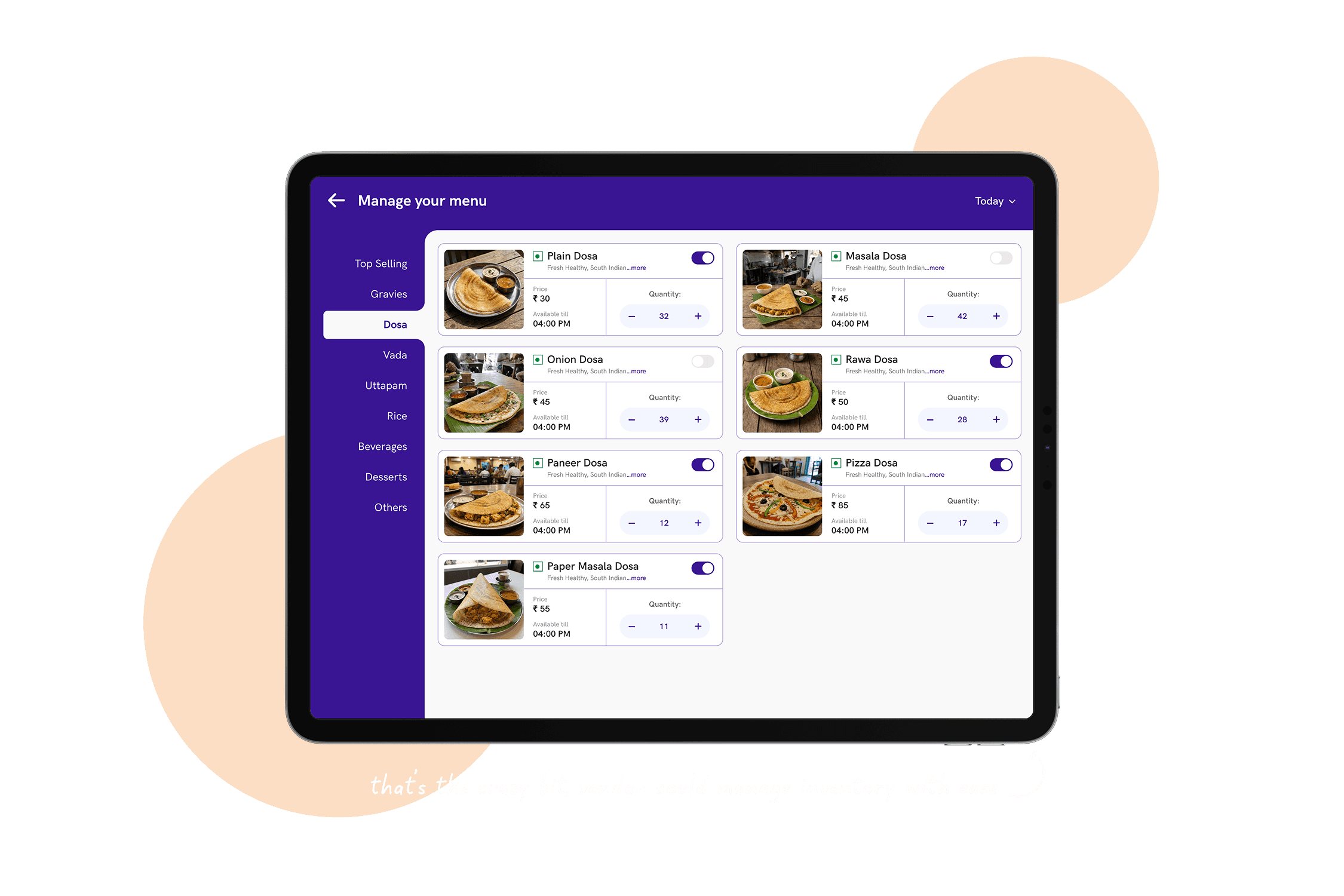
easy managing the inventory
Iteration with Vendors, not just for them
Iteration with Vendors,
not just for them
We knew adoption would be tough - many vendors resisted change. So we co-designed:
Tested low-fi prototypes directly on POS machines during off-peak hours
Gathered feedback → iterated overnight → tested again next day
Added multilingual support so English wasn’t a barrier
Involved vendors in naming and layout decisions, giving them ownership
We knew adoption would be tough - many vendors resisted change. So we co-designed:
Tested low-fi prototypes directly on POS machines during off-peak hours
Gathered feedback → iterated overnight → tested again next day
Added multilingual support so English wasn’t a barrier
Involved vendors in naming and layout decisions, giving them ownership
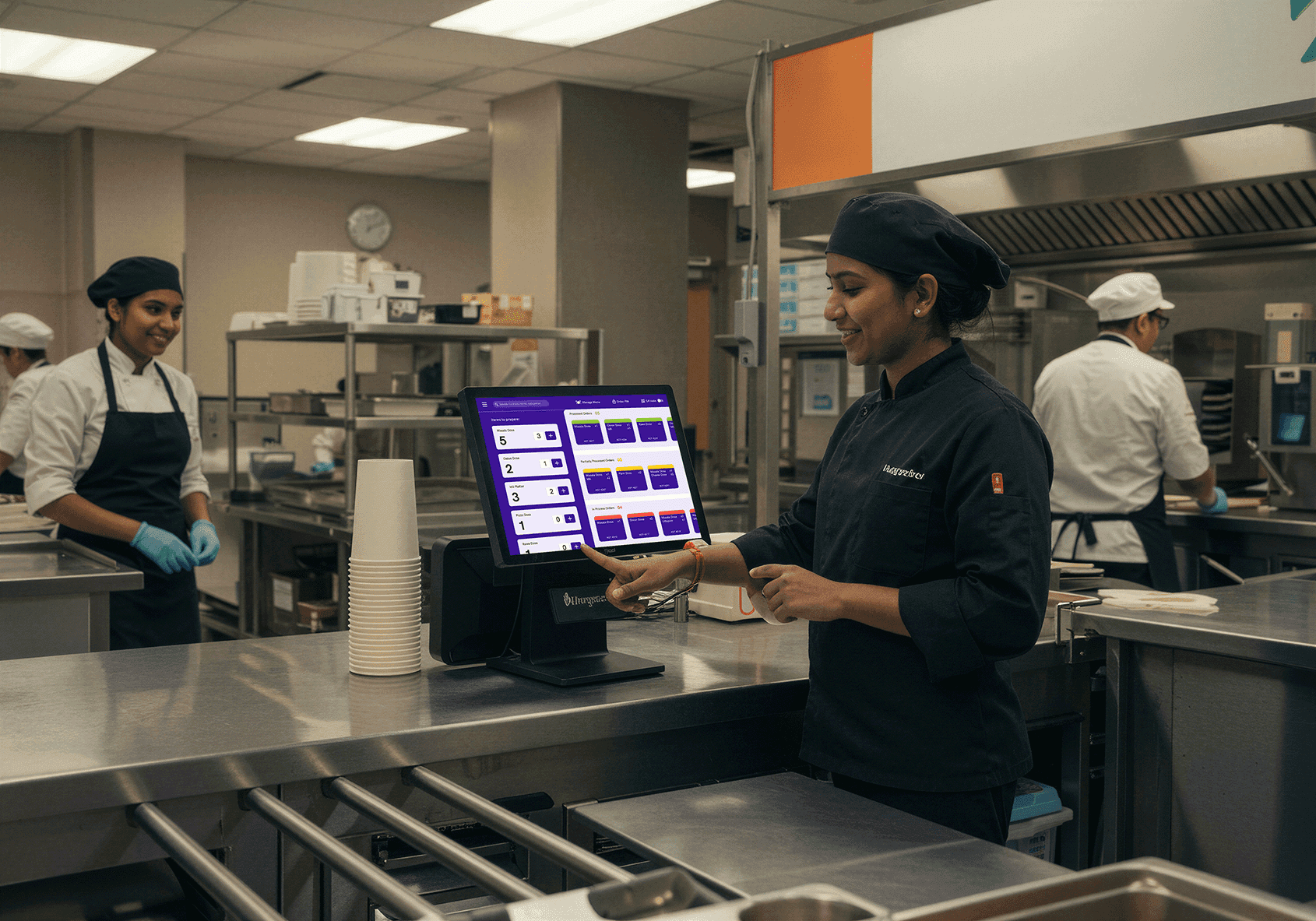
Now the screen feels like
Now the screen feels like
It’s working for me, not against me
It’s working for me, not against me
Overcoming
Challenges
Overcoming Challenges
Resistance to change: Vendors trusted paper slips. Co-design helped build ownership.
Language diversity: Solved with multilingual + icon-first design.
Technical constraints: Optimized for low-spec POS machines.
Ops buy-in: Aligned with ops managers by showing efficiency gains in pilots.
Resistance to change: Vendors trusted paper slips. Co-design helped build ownership.
Language diversity: Solved with multilingual + icon-first design.
Technical constraints: Optimized for low-spec POS machines.
Ops buy-in: Aligned with ops managers by showing efficiency gains in pilots.
The Impact:
Skepticism to Reliance
The Impact:
Skepticism to Reliance
Six months post-rollout, the transformation was undeniable:
Six months post-rollout, the transformation was undeniable:
98% vendor adoption
18% higher engagement
across cafeterias
across cafeterias
17% faster prep times
17% faster prep times
during peak rush
during peak rush
23% fewer incorrect
23% fewer incorrect
or missed items
or missed items
Reflection:
Designing for the
Unseen Heroes
Reflection:
Designing for the
Unseen Heroes
This project reinforced one of my strongest beliefs: great design often happens where no one is looking.
Users never saw the Kitchen System. But the reliability, speed, and trust they experienced in the cafeteria came directly from it.
For me, it was a humbling lesson in empathy. The people sweating in kitchens often ignored in design conversations, were the real backbone of HungerBox. By designing for them, we improved the experience for everyone.
This project reinforced one of my strongest beliefs: great design often happens where no one is looking.
Users never saw the Kitchen System. But the reliability, speed, and trust they experienced in the cafeteria came directly from it.
For me, it was a humbling lesson in empathy. The people sweating in kitchens often ignored in design conversations, were the real backbone of HungerBox. By designing for them, we improved the experience for everyone.
thank you!
keep exploring
thank you!
keep exploring


Bringing ideas
to life,
one product
at a time
Made with 🔥

Bringing ideas to life,
one product at a time
Made with 🔥